
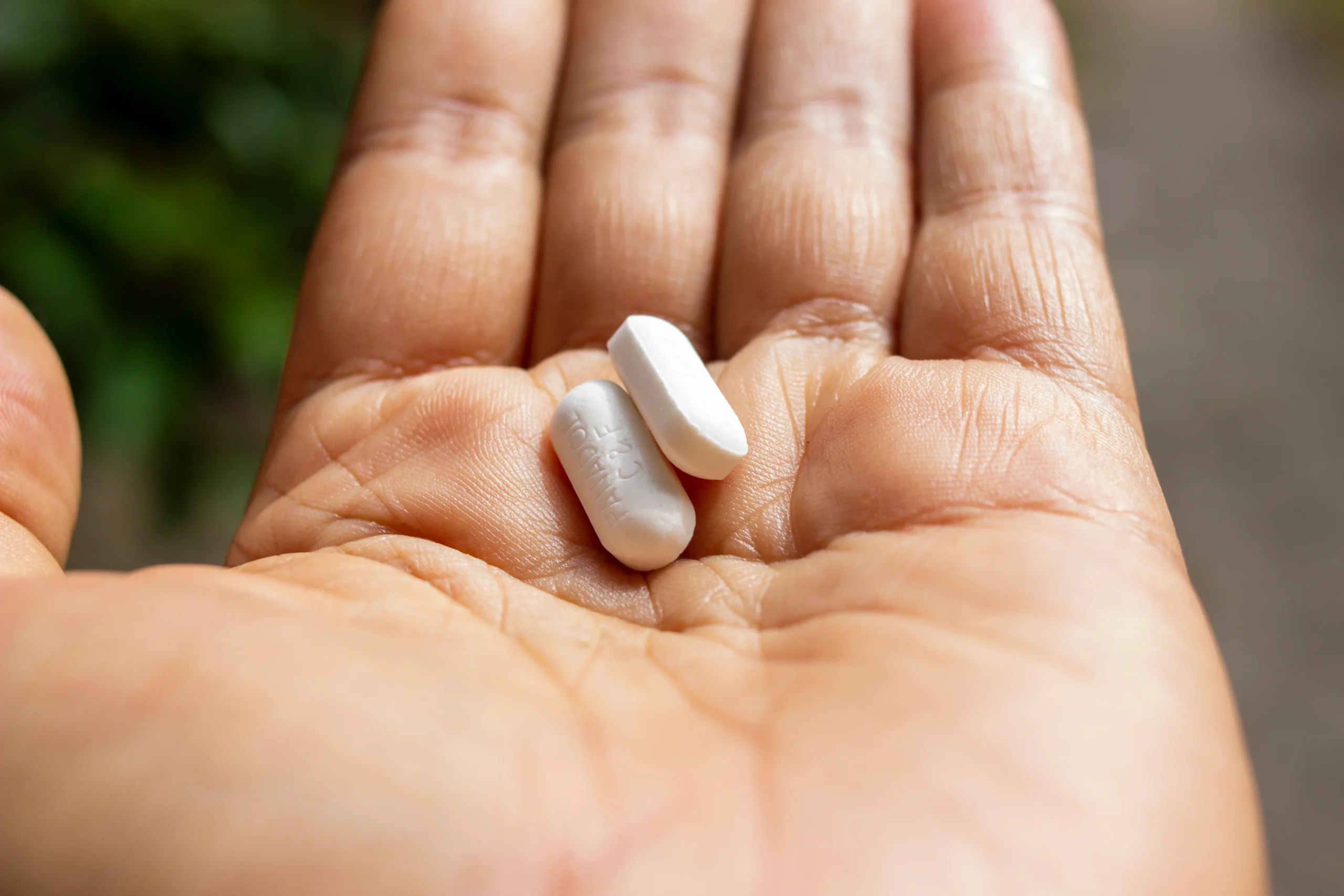
What We’re Doing to Our Children’s Health — and What Southern Oregon Families Need to Know
There is a war happening inside every human body — a vast, ancient negotiation between trillions of microorganisms and the human systems they inhabit. Your gut alone contains more microbial cells than your entire body contains human cells. These bacteria, fungi, and other microbes are not invaders. They are partners. They help digest food, regulate immune response, produce neurotransmitters, and protect against harmful pathogens.
Antibiotics, when they arrived in mass-produced form in the 1940s and 50s, were miraculous. They saved millions of lives from infections that had been killing people for all of human history. As Dr. Peter Attia has written, it was arguably the single most important leap in the transition from medicine 1.0 to medicine 2.0. For 250,000 years of human existence, we died like dogs from infection. Antibiotics changed that.
But somewhere between miracle and default, antibiotics became routine — handed out at every sniffle, prescribed before every procedure, dispensed with the implicit reassurance: it won’t hurt you. As it turns out, that reassurance was wrong.
The Big Idea: Antibiotics Are Carpet-Bombing Our Children’s Future
The metaphor Dr. Makary uses is vivid and accurate: antibiotics are like carpet bombing your microbiome. They do not discriminate between the harmful bacteria they are targeting and the beneficial communities of microorganisms that keep your immune system calibrated, your metabolism working, and your gut lining intact.
For adults, the impact of a course or two of antibiotics over a lifetime is meaningful but recoverable. For children — especially in the first two to three years of life, when the microbiome is still forming its foundational communities — the impact may be permanent.
This is not a fringe hypothesis. It is now the subject of major research from some of the most respected medical institutions in the United States, and the data are both striking and deeply concerning.
The Evidence: What the Mayo Clinic and Danish Studies Found
Researchers at the Mayo Clinic tracked 14,000 children in Olmsted County, Minnesota — a uniquely well-documented population around Rochester — and compared those who had received at least one antibiotic course in the first two years of life with those who had not. After statistically controlling for other variables, they found associations that went well beyond anything most clinicians expected.
Among children who had taken antibiotics in their first two years, compared to those who had not, the researchers observed a 20% increase in obesity, a 21% increase in learning disabilities, a 32% increase in attention deficit disorder, a 90% increase in asthma, and a 289% increase in celiac disease. These were all statistically significant findings.
It is worth pausing on that celiac number. Nearly a threefold increase in a serious autoimmune condition of the gut — from antibiotic exposure in infancy. This is not a subtle signal. This is a flare.
The finding was then repeated in a Danish study of approximately one million children, producing similar associations. And critically, the researchers found a dose-dependent relationship: the more courses of antibiotics a child had received, the higher the rates of these conditions. In the science of causation, a dose-dependent relationship is one of the strongest indicators that an association may be real and not simply coincidental.
These are observational studies — they cannot prove that antibiotics directly caused these conditions. Makary is careful to say so, and it is an important caveat. The children who received antibiotics received them because they were sick, and it is possible that the underlying illnesses, not the antibiotics, drove some of these associations. However, the dose-dependent relationship, the repeatability across a million-child dataset, and the plausibility of the biological mechanism together make a compelling case for taking this signal very seriously.
“The average 10-year-old in America has taken 11 courses of antibiotics. The average 3-year-old has taken 2.5 courses. We think the 0-3 age group is when the microbiome is most sensitive.”
— Dr. Marty Makary
The Scale of Overprescribing
According to multiple studies, approximately 60% of outpatient antibiotic prescriptions in the United States are unnecessary — written for viral infections like colds, flu, and upper respiratory illness, against which antibiotics are biologically useless. A 2024 analysis by Trilliant Health found that in 2023, unnecessary antibiotic prescribing rates for viral upper respiratory infections reached 17% in urgent care settings and 15% in telehealth — levels higher than at any point in the previous five years.
Meanwhile, approximately 100,000 Americans die each year from antibiotic-resistant bacteria — organisms that have evolved to survive the drugs we most commonly use against them. The timeline of resistance has accelerated dramatically: in the 1960s, it took bacteria roughly 23 years to evolve around a new antibiotic. Today, it takes about one year.
The connection is direct: we have been carpet-bombing our own biological ecosystems for decades, and the bacteria have adapted. The result is that the miracle drugs are becoming less miraculous — and we are facing that reality while also learning that the drugs were doing damage we never accounted for in the first place.
Why the Dogma Persisted
How did the assumption that “antibiotics won’t hurt you” persist for so long? The same cognitive mechanism described in Episode One: effort justification and herd thinking.
When antibiotics became the tool that finally gave medicine power over infection — the instrument that elevated physicians from barbers with lancets to healers with real authority — they became part of the professional identity of medicine itself. Prescribing an antibiotic was the active, confident, caring response to a sick child. Saying “this is viral, antibiotics won’t help” felt passive, uncertain, and unsatisfying to both physician and parent.
There is also a structural problem: the incentive to prescribe and the incentive to monitor downstream consequences operate on completely different time horizons. A parent brings in a child with an ear infection. The doctor has fifteen minutes. Prescribing an antibiotic takes thirty seconds and makes the parent feel something is being done. The potential downstream effect on that child’s microbiome, and any connection to asthma or learning disability five years later, is invisible to everyone in the room.
Alexander Fleming, who discovered penicillin in 1928, warned about exactly this when he accepted the Nobel Prize. He had watched factories spinning up mass production of his discovery and was alarmed. He wrote in his personal diary about his fear that the miracle he’d found in a petri dish — mold from an open window killing staph on an agar plate — would be squandered through carelessness. His concern has proven prophetic.
What This Means in Practice: The Operating Room
The overuse of antibiotics is not only an outpatient problem. Makary describes giving thousands of “unnecessary” antibiotics in the operating room himself — not out of carelessness, but out of protocol. Standard practice requires an antibiotic be given before every surgical incision, regardless of the procedure’s complexity or the infection risk involved.
This protocol originated from legitimate research on major open abdominal surgeries, where infection risk is real and significant. Over time, without new randomized trials to test the assumption, it was extrapolated to every surgical procedure — including minor laparoscopic cases where post-operative infection is so rare it is effectively unheard of. The rationale given, as Makary learned, was practical rather than scientific: if you make the rule apply to everything, clinicians are more likely to remember to apply it when it truly matters.
The cost of this “better safe than sorry” logic, paid in disrupted microbiomes and escalating resistance, was never factored into the calculation.
Local Context: Rural communities like those in Southern Oregon — Josephine County, Klamath County, and the more remote parts of Jackson County — face particular risks. Studies on antibiotic stewardship consistently show that rural areas and urgent care settings have higher rates of unnecessary prescribing than urban hospital settings. In communities where access to follow-up care is limited, the path of least resistance is often the prescription. La Clinica’s expansion in Jackson County and the growth of integrative medicine practices in the region represent opportunities to build a different culture around antibiotic stewardship — one that asks hard questions before reaching for the prescription pad.
The Gut-Brain-Immune Axis: A New Framework
Perhaps the most important shift in how medicine is beginning to understand chronic disease involves a concept that barely existed in the mainstream medical curriculum twenty years ago: the gut microbiome as a regulatory system that influences virtually every other system in the body.
The correlations found in the Mayo Clinic study — connecting early antibiotic exposure to obesity, learning disabilities, ADHD, asthma, and celiac disease — make more sense when you understand that the gut microbiome is not just a digestive organ. It is an immune training ground. It is a site of neurotransmitter production. It communicates with the brain through what researchers call the gut-brain axis. It regulates inflammatory response, metabolic function, and the calibration of the immune system to distinguish friend from foe.
When you disrupt this system in the first years of life — when it is still forming, still learning, still establishing the microbial communities that will govern a child’s health for decades — you may be writing consequences into biology that no medication can fully correct later.
This is not anti-antibiotic. Antibiotics save lives. A child with bacterial meningitis, strep throat that has spread to become a deep tissue infection, or pneumonia that is not responding to rest and fluids needs antibiotics, immediately, without question. The goal is not less medicine. The goal is better judgment — the kind of judgment that asks, before every prescription: is this actually bacterial? Is this serious enough that the known benefits outweigh the growing evidence of harm? Could we watch and wait, safely, for 48 hours?
Call to Action
For families in Southern Oregon, here is a practical framework:
- Before accepting an antibiotic prescription for a child, ask your provider: “Is this confirmed bacterial, or are we treating empirically? What would happen if we watched for 48 hours first?” This is a medically appropriate question and reflects current CDC guidance on antibiotic stewardship.
- Be aware that urgent care and telehealth settings have the highest rates of unnecessary antibiotic prescribing. When possible, a relationship with a primary care provider who knows your child’s history produces better judgment than episodic urgent care visits.
- If your child does need antibiotics, ask about probiotic supplementation during and after the course to help restore microbial balance. While research is ongoing, there is growing evidence for benefit and minimal risk.
- If your child has received multiple antibiotic courses in early life and is now experiencing chronic conditions — asthma, eczema, recurring gut issues, attention difficulties — consider discussing gut microbiome restoration with an integrative or functional medicine provider. This is an area where Southern Oregon has genuine local expertise.
- Advocate for antibiotic stewardship programs in local schools and pediatric practices. These programs — which provide education to prescribers, feedback on prescribing patterns, and decision support tools — have been shown to significantly reduce unnecessary prescribing without compromising outcomes.
Source Note: Key research referenced in this episode includes: Association of Infant Antibiotic Exposure With Childhood Health Outcomes, Mayo Clinic Proceedings (2020); Antibiotics versus Appendectomy for Acute Appendicitis, NEJM (2020, 2021); CDC Antibiotic Stewardship Data Reports (2024); Trilliant Health Analysis of Antibiotic Overprescribing (2024). The framework for evaluating causality draws on the Bradford Hill criteria for epidemiological evidence.