
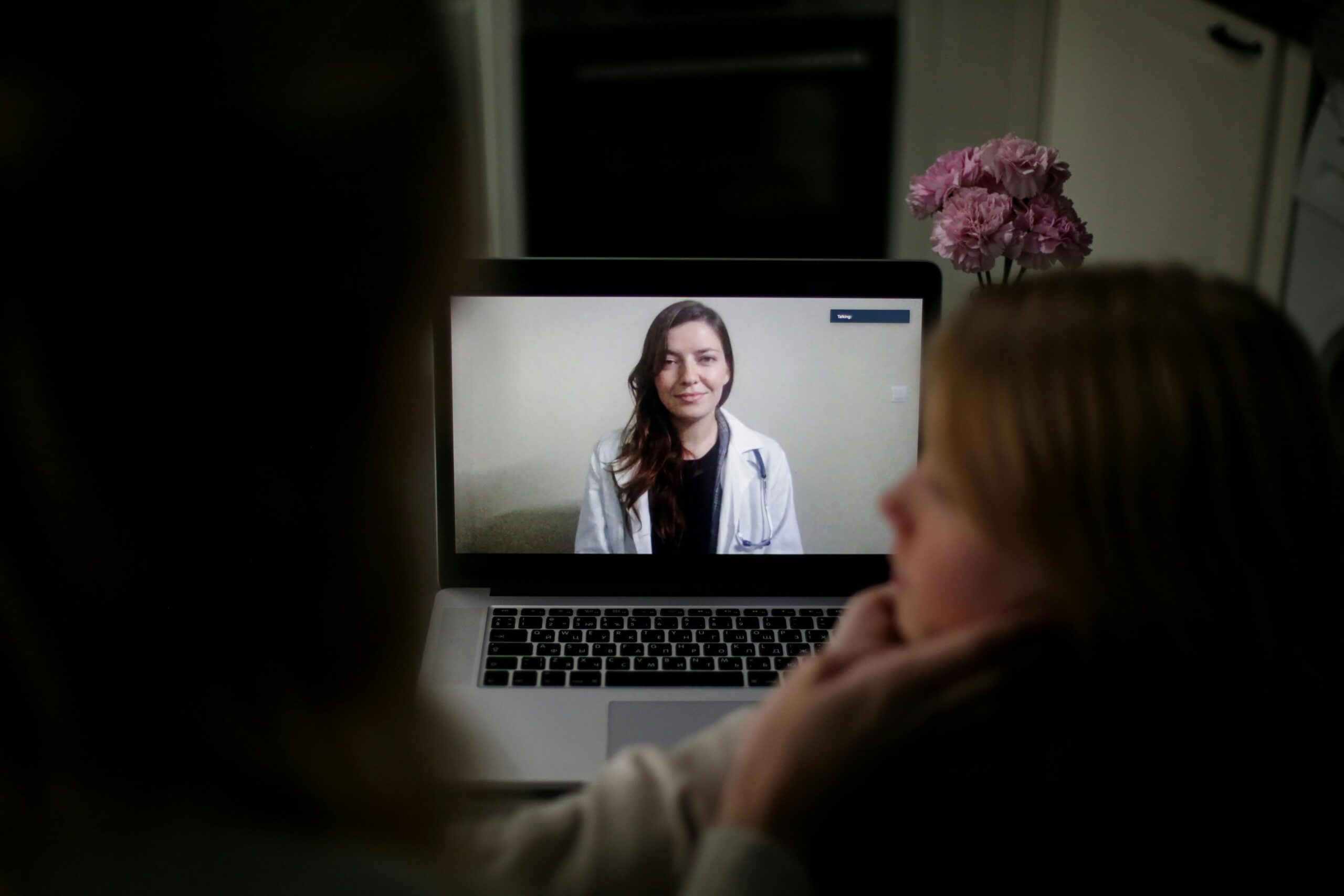
AI and the Future of Southern Oregon Medicine, Part 2 of 3
Start with the arithmetic.
You live in Medford. You work. You have insurance — maybe through your employer, maybe through the marketplace, maybe through AllCare or Jackson Care Connect if your income qualifies. You notice something that needs medical attention. Not an emergency, but something real. You call to make a primary care appointment.
The answer, at most Asante family medicine clinics, is that the panel is closed. At La Clinica del Valle, the waitlist is six to nine months. If you need behavioral health support, the wait exceeds three months. If your child needs a pediatric specialist — endocrinology, developmental pediatrics, behavioral health — you may be looking at a referral to Portland or beyond, with all the cost and time that entails.
This is not a description of what happens to people without insurance or people in extreme poverty. This is what happens to working families in Jackson and Josephine counties right now, today, regardless of coverage status. Fewer than 60 primary care providers serve every 100,000 residents here, against a state average of 83. We are running at 70 percent of a state average that is itself in decline.
Now add the misdiagnosis layer. The Undiagnosed Network — a consortium of twelve academic hospitals including Stanford, UCLA, Harvard, and the NIH — sees thousands of patients every year who have been through the formal healthcare system without a correct diagnosis. They are in pain. Some have been sick for years. And that population represents only the fraction with enough resources to reach a major academic center. Behind them is a much larger group of people whose conditions are being managed, suppressed, or missed entirely because no single clinician has the time or the tools to see the full picture.
A child in this region who starts having trouble walking, trouble chewing, headaches that won’t stop — that child will wait months for specialist appointments, accumulate imaging studies, and may still have no answer. The mother who finally got one did it by typing her son’s records into GPT-4. The answer was tethered cord syndrome. A neurosurgeon confirmed it.
This is the baseline. This is what access to healthcare actually looks like for working families in Southern Oregon right now. And the question this article addresses is specific: what would AI augmentation of the regional healthcare system actually change for that family? Not in the abstract. Concretely. In dollars, in wait times, in diagnoses caught and outcomes improved.
The Augmentation Hierarchy and What It Means for You
Isaac Kohane, chair of biomedical informatics at Harvard Medical School and editor-in-chief of the New England Journal of Medicine AI, describes a clear hierarchy of where AI augmentation in medicine is ready to deploy right now, without any further technological breakthrough.
The first tier is visual interpretation. Radiology, pathology, dermatology. In all three specialties, AI systems already perform at or above the level of many expert clinicians on the core task of image recognition. A 2018 study published in JAMA showed that Google’s AI could detect diabetic retinopathy from retinal images at expert level. More recently, a research group called EchoCLIP trained a model on one million echocardiograms paired with one million clinical reports, producing a system that can interpret cardiac ultrasound — multidimensional, Doppler-weighted, variable by technician — with a level of clinical integration that previous systems could not achieve.
For Southern Oregon families, this tier matters immediately because the region is short on imaging specialists. Emergency departments and rural hospitals in Jackson and Josephine counties are under-resourced for radiology coverage. The traditional workaround — sending overnight reads to radiologists in Australia or India via satellite — is itself a patch on a workforce gap. AI augmentation doesn’t just match that workaround. It exceeds it, because it can integrate your clinical history, your prior imaging, and your presenting symptoms in ways a remote reader working without your full record cannot.
What this means practically: a faster, more contextualized read on your CT scan. An AI-assisted dermatology assessment that doesn’t require a six-week wait for a specialist appointment. A retinal exam — which AI can use to assess not just eye disease but hypertension, estimated age, sex, and early indicators of systemic disease — integrated into routine primary care visits rather than reserved for ophthalmology referrals that most patients in this region never get.
The second tier is where the primary care shortage gets directly addressed. This is AI augmentation of the combined image-and-language work of internists and primary care physicians — interpreting symptoms, combining them with lab values, clinical history, and imaging to reach a diagnosis and treatment plan. This tier requires what’s called transformer architecture, the same technology underlying ChatGPT and similar tools, which gave AI systems the ability to understand context and sequence rather than just pattern-matching. With that capability, AI can now work across text and images simultaneously, bringing full clinical context to bear in the way that only a completely informed clinician previously could.
The Nurse Practitioner Multiplier: What It Means for Your Appointment Wait
The American Association of Medical Colleges projects a shortage of 50,000 primary care physicians by 2035. Southern Oregon is already operating inside that shortage. The question isn’t whether to wait for it to resolve — it won’t, not on any timeline that helps the person who can’t get an appointment today. The question is how to make the workforce that exists perform at a level the absent workforce would have provided.
Kohane’s answer is specific: nurse practitioners and physician assistants, augmented by AI tools, can cover the vast majority of what primary care physicians currently provide for most patients most of the time. Not every complex case. Not the most demanding diagnostic or procedural work. But the routine, chronic care, preventive, and triage work that constitutes the majority of primary care volume — the hypertension management, the diabetes monitoring, the antibiotic decisions, the referral triage — that work is augmentable now.
His concrete model is instructive. Amazon’s One Medical service operates at low cost using nurse practitioners who can be reached by text and appointment. Kohane believes those practitioners, supported by AI that can recommend appropriate imaging, flag medication interactions, assess chronic disease progression, and surface patterns in a patient’s longitudinal history, could handle the full scope of primary care for most patients most of the time, reserving specialist referral for cases that genuinely require it.
For a working family in Grants Pass or Medford, that model means something specific: an appointment available in days rather than months. A clinician who has your full history in front of them and is supported by a tool that can flag what a fifteen-minute visit might miss. A first-line resource that isn’t the emergency room, which is where people in this region currently go when they can’t get timely primary care — at dramatically higher cost to themselves and the system.
The cost differential matters. An ER visit for a condition that could have been managed in primary care costs, on average, ten times more than the primary care visit would have. For a family carrying a high-deductible insurance plan — and 42 percent of insured Southern Oregonians are underinsured by standard measures — that differential comes directly out of pocket. AI-augmented nurse practitioner care at primary care pricing isn’t just more accessible. For working families, it’s dramatically less financially destructive than the ER alternative that the current system is forcing them toward.
The Misdiagnosis Epidemic and the Wide-Angle View
There is a dimension of the access problem that never shows up in wait time statistics, and it’s worth naming directly.
When you finally get an appointment, after months of waiting, the clinician you see has fifteen minutes. They are managing a full panel of patients, updating an electronic health record in real time, and processing your presenting complaint against everything they can hold in working memory about your history. The cognitive load is prohibitive. The longitudinal patterns that would reveal a diagnosis — the symptom that appeared eighteen months ago that connects to the symptom appearing now, the lab value that’s been trending in a direction that individually looks normal but collectively signals risk — those patterns are routinely missed. Not because your doctor is incompetent. Because no human being can process that volume of information in real time without support.
AI augmentation provides that support. It holds your full record. It surfaces anomalies. It generates the differential that a stretched clinician might not have time to construct from scratch.
Kohane’s research on autism illustrates what the wide-angle view can find. Fifteen years ago, he studied electronic health records for autism patients and noticed high rates of gastrointestinal problems. Specialists were dismissive — the assumption was these were secondary behavioral symptoms. Kohane ran a large-scale study across tens of thousands of patients. The results showed meaningful subgroups of autism patients had immunological problems — type 1 diabetes, inflammatory bowel disease, elevated infection rates — that weren’t being recognized or treated as connected to their autism. Parents had been reporting these symptoms for years and being told, implicitly, that they were imagining things. The data showed they were right.
Those findings were not the result of a new diagnostic test. They were the result of having a wide enough view to see a pattern that no individual clinician, seeing one patient at a time, could have detected. That capacity — to find patterns in aggregate data that are invisible at the individual encounter level — is what AI brings to population health.
For Southern Oregon families, this isn’t abstract. The Oregon All-Payer Claims Database, administered by the Oregon Health Authority, contains longitudinal claims data for the region’s insured population. AllCare Health and Jackson Care Connect hold detailed records for the region’s Medicaid enrollees — the working families and lower-income households who make up a substantial share of the population in both counties. That data, analyzed at scale, could surface comorbidity patterns, underdiagnosis rates, and population health trends that current clinical practice has no mechanism to detect.
What might it find? Undiagnosed autoimmune conditions in patients who’ve been treated for symptoms rather than causes. Behavioral health crises that were preceded by physical health patterns nobody connected. Chronic pain populations whose underlying conditions were never identified. These are knowable things. They’re not being found because nobody has had the tools or the access to look.
What Patients Are Already Doing — And What That Means
Here is something that Southern Oregon families need to know, because it is already happening and it affects how you should think about your own healthcare.
People are using AI diagnostic tools right now, on their own, without institutional support, sometimes getting answers the formal system missed them. The tethered cord case that opened this article is not an isolated example. It is the leading edge of a larger pattern in which patients who have been failed by the formal system are turning to AI tools as a last resort — and sometimes finding what was missed.
Kohane’s assessment of this reality is honest: for patients in regions with limited access, AI is better than no doctor, and possibly better than the stretched, time-limited encounter the current system provides. That is not an endorsement of self-diagnosis. It is an acknowledgment that the alternative for many Southern Oregon families is not a choice between AI and a physician. It is a choice between AI and nothing.
There are real risks in this. The consumer versions of these tools — standard ChatGPT, for instance — are not HIPAA-compliant. Physicians who enter identifiable patient information into those systems are in violation of federal privacy law. And patients using AI tools without clinical oversight miss the examination, the follow-up, the clinical judgment that turns a plausible answer into a confirmed diagnosis and appropriate treatment.
But the enterprise versions of these tools — running on HIPAA-compliant cloud infrastructure — are already in clinical deployment at major academic medical centers. Epic, the electronic health record system used by Asante, has integrated GPT-4. Stanford is using it with patient data. The legal and technical framework exists. What’s missing in Southern Oregon is not the technology. It’s the institutional decision to deploy it in ways that reach the families who need it most.
What Needs to Happen, and For Whom
For working families in Southern Oregon, the AI augmentation argument is not a technology story. It is a healthcare access story. The technology exists. The question is whether the institutions that control the clinical infrastructure in this region will deploy it in ways that actually change the access picture for ordinary people, or whether they will adopt it in ways that improve their own operational efficiency while the waitlist stays at six months.
That question has specific answers that depend on specific decisions by specific institutions.
Asante Health System, which spent $177 million on community benefit in fiscal year 2022 and has committed to an expanded $100 million community investment goal through AsanteForward2030, has the clinical infrastructure, the electronic health record system, and the community mandate to be the regional leader in AI-augmented primary care delivery. The concrete step is a decision to partner with nurse practitioners and physician assistants, support them with AI tools that are already available through Epic’s existing GPT-4 integration, and measure the impact on wait times and access for patients who currently can’t get on a panel.
AllCare Health and Jackson Care Connect hold longitudinal claims data for the region’s Medicaid population — the working families most directly affected by the access shortage. That data is the raw material for the population-level pattern analysis that could surface what the current system is missing. The concrete step is an analytical partnership, whether with OHA, with a research institution, or with one of the growing number of companies building population health tools on top of claims data, that puts that data to work for the people it describes.
Southern Oregon University’s health sciences programs and the OHSU nursing school on the Ashland campus are training the practitioners who will deliver augmented care in this region. The concrete step is curriculum that prepares nurse practitioners and physician assistants to work with AI tools from their first clinical placement — not as a future skill, but as a present one that is already standard at academic medical centers.
Oregon legislators and OHA have a direct role in whether the 21st Century Cures Act’s patient data access provisions are enforced in ways that are practical rather than nominal — whether a Southern Oregon patient can actually download their full clinical record into an app in minutes, or whether the legal right to data remains theoretical because the APIs are deliberately hostile. The concrete step is substantive enforcement and a clear framework for how the Oregon All-Payer Claims Database can be accessed for population health research that serves communities rather than institutional interests.
None of these steps require a technological breakthrough. They require organizational decisions. And for the working family in Medford who has been waiting six months for a primary care appointment, those decisions are not abstract. They are the difference between care that reaches them and care that doesn’t.
The third article in this series addresses what stands in the way — and who benefits from leaving it there.
This is the second article in a three-part series on AI and the future of medicine in Southern Oregon. Part 1 examined the structural nature of the provider shortage. Part 3 addresses the institutional resistance, the real risks, and what Southern Oregon needs to demand from its healthcare institutions. ReImagine Healthcare is a subsidiary of Flourish Charity, a 501(c)(3) nonprofit. We publish research and analysis on healthcare system design in Southern Oregon. We welcome responses, corrections, and partnership inquiries at reimagine-healthcare.org.